



 English
 Français
 Deutsch
 Italiano
 Português
 Русский
 Español
 简体中文
简体中文 हिन्दी
 日本語
日本語
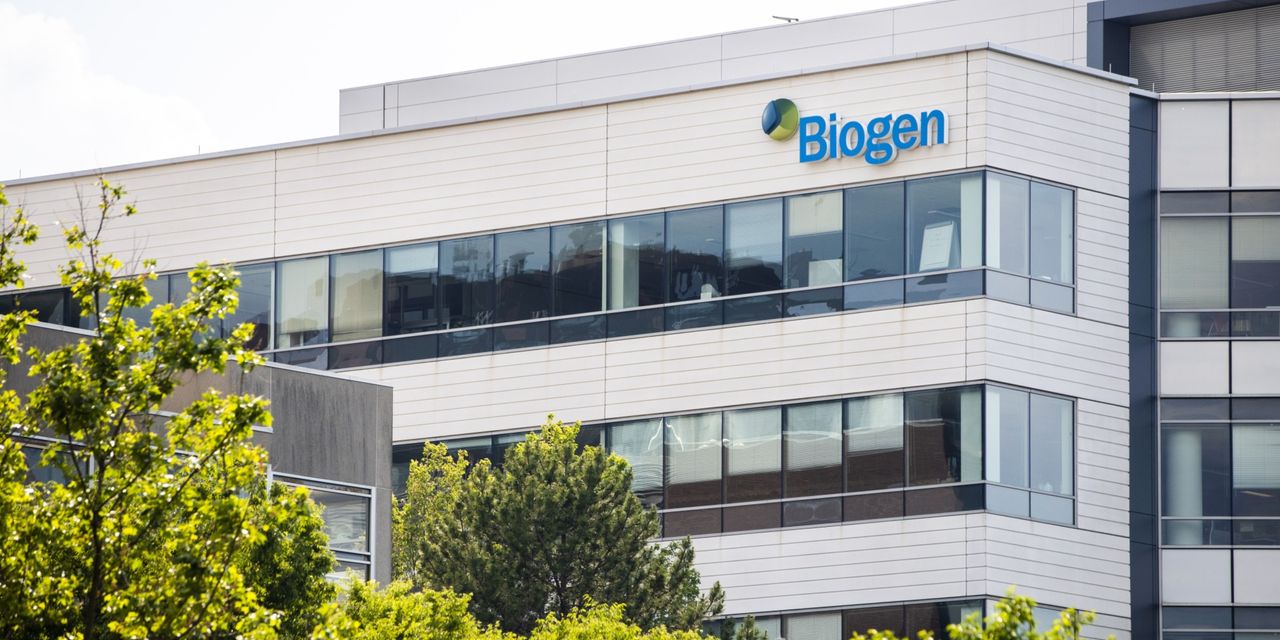
Biogen will expand its portfolio of neuromuscular disease treatments with Reata’s Skyclarys.
Adam Glanzman/Bloomberg
Biogen
announced a $7.3 billion acquisition on Friday, the first significant strategic effort by the company’s new leadership to diversify its shrinking business.
Biogen (ticker: BIIB) said it had cut a deal to acquire
Reata Pharmaceuticals
(RETA), which received Food and Drug Administration approval in February for the first and only treatment for an ultra-rare genetic neuromuscular disease called Friedreich’s ataxia.
The deal was Biogen’s first under its new CEO, Christopher Viehbacher, who stepped into the role in November. It also was Biogen’s largest acquisition since the company’s founding in 1978. It comes after a reshuffle of the Biogen board of directors, which in recent years had blocked a series of acquisitions proposed by company management, according to reporting in 2021 by the healthcare news outlet STAT.
Biogen shares were up 1.2% in premarket trading on Friday morning, but fell as the market opened. The deal comes at the end an unsettled week for Biogen investors, who appear increasingly anxious over the impending FDA approval decision for zuranolone, a depression drug seen as key to the company’s future.
Viehbacher hardly mentioned zuranolone during the company’s earnings call on Tuesday, despite an Aug. 5 deadline for the FDA to decide on the drug’s fate. Investors took that as a sign that Biogen might be getting worrying signals from the agency, and shares fell 2.4% on Tuesday, and another 1.9% on Wednesday.
The deal announced Friday could serve to change the narrative for Biogen. It could also give the company another shot at driving growth, if the news from the FDA next week on zuranolone isn’t good.
Under the terms of the deal, Biogen will pay $172.50 per share in cash for
Reata,
a 58.9% premium to the stock’s Thursday closing price of $108.55. Reata shares were up 51.9% to $164.89 on Friday.
Analysts noted Friday that the deal wasn’t cheap, but potentially a good fit for Biogen. “We view the acquisition, although not inexpensive, as fitting the company’s previously described acquisition goals,” William Blair analyst Miles Minter wrote on Friday.
Biogen’s revenue and earnings are on a downward slide. Sales of the company’s multiple sclerosis medicines, which were its core business for decades, have been fading as patents expire. Spinraza, another key Biogen medicine which treats spinal muscular atrophy, is struggling amid competition from other medicines. That has left Biogen’s future heavily reliant on its Alzheimer’s drug Leqembi, which it shares with
Eisai
(ESAIY), and zuranolone, which it shares with
Sage Therapeutics
(SAGE). Both of those drugs face slow, uncertain commercial futures.
On Tuesday, Viehbacher said that the company would use M&A to diversify its business into rare disease, immunology, and neuropsychiatry. Biogen Chief Financial Offcier Michael McDonnell had said in April that the company had around $10 billion in “dry powder” to spend on M&A. It’s now expending much of that on Reata.
“We do believe this is a highly attractive opportunity on our path to returning Biogen to sustainable growth, and it’s expected to drive return to revenue and non-GAAP EPS growth,” Viehbacher said on Friday morning’s investor call.
Biogen expects the Reata deal to significantly contribute to the company’s non-GAAP diluted earnings per share by 2025. Analysts had expected Reata to report $55.8 million in revenue this year, ramping to $1 billion in revenue in 2026, and $1.2 billion in 2027.
Reata is awaiting approval of its Freidreich’s ataxia drug in Europe. The company has other programs in its pipeline, but they are in early-stage development. Viehbacher said Friday that the other Reata programs are “early” and that not a lot of value was ascribed to them as part of the deal. He said he was “actually quite interested” in them.
“This is a very clean one-product story for Biogen to acquire, and we believe it will be one of the most attractive orphan drug launches in biotech over the next few years,” TD Cowen analyst Tyler Van Buren wrote Friday.
Biogen said that it will pay for the deal with cash on hand plus some new debt. As of June 30, Biogen had cash and cash equivalents of $7.3 billion. Biogen CFO McDonnell said on the investor call that the company expected to issue “something on the order of about a billion and a half” dollars in term debt, and that the company would pay it down over the course of two years.
“We’ve got plenty of sources for a very quick repayment and putting our balance sheet back to a similar place that it’s in today,” McDonnell said.
Write to Josh Nathan-Kazis at [email protected]
Read the full article here