



 English
 Français
 Deutsch
 Italiano
 Português
 Русский
 Español
 简体中文
简体中文 हिन्दी
 日本語
日本語
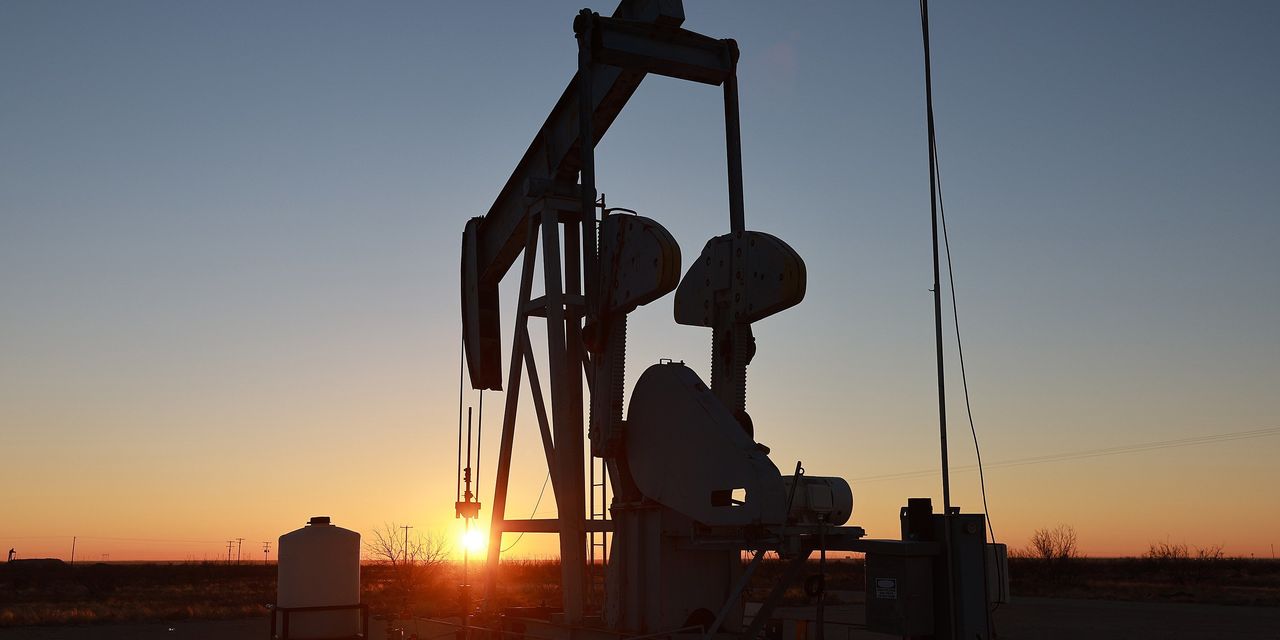
Oil futures climbed higher on Thursday, with bulls looking to salvage a monthly gain for crude as signs of tight supplies provided support.
Saudi Arabia is expected to extend its 1 million-barrel-a-day production cut into October, according to a survey conducted by Bloomberg, and news reports said Russia is likely to announce details of a deal with OPEC+ members to reduce oil supplies.
Price action
-
West Texas Intermediate crude for October delivery
CL00,
+1.92% CL.1,
+1.92% CLV23,
+1.92%
was up 88 cents, or 1.1%, at $82.51 a barrel on the New York Mercantile Exchange. Front-month WTI futures were trading up around 0.9% in August, FactSet data show. -
October Brent crude
BRNV23,
+1.07% ,
the global benchmark, was up 79 cents, or 0.9%, at $86.65 a barrel on ICE Futures Europe on the contract’s expiration day. The more actively traded November contract
BRN00,
+1.43% BRNX23,
+1.43%
gained 58 cents, or 0.7%, to $85.82 a barrel. Front-month Brent was looking at a more than 1% August gain, which would be its third straight monthly advance. -
September gasoline
RBU23,
-1.20%
was down 1.6% at $2.764 a gallon and September heating oil
HOU23,
+1.08%
added nearly 0.1% to $3.0986 a gallon, ahead of the expiration of the contracts at the end of the trading session. -
October natural gas
NGV23,
-0.29%
traded at $2.829 per million British thermal units, up 1.1% for the session. It traded more than 7% higher for the month.
Market drivers
A summer rally for oil, attributed in part to production cuts that saw Saudi Arabia voluntarily reduce production by 1 million barrels a day beginning in July, stalled in August on worries over the global economic outlook. Soft Chinese economic data and concerns about the country’s ailing property sector raised doubts about demand from the world’s second-largest crude consumer.
However, Saudi Arabia is widely expected to extend its million barrel-per-day cuts through October, Manish Raj, managing director at Velandera Energy Partners, told MarketWatch.
Bloomberg reported Wednesday that its survey showed 20 of 25 of analysts and traders predict Saudi Arabia will extend its cut into October.
“The money question is, will the Saudis deepen the cuts? Birds of feather flock together, so it is possible [the] Saudis will be joined by Kuwait and the U.A.E., who have so far been sitting on the fence,” said Raj.
In Russia, Deputy Prime Minister Alexander Novak told President Vladimir Putin Thursday that Russia will announce details of an agreement with OPEC+ to reduce the supplies of oil, according to a report from Reuters.
On Wednesday, the Energy Information Administration reported that U.S. commercial crude inventories fell by 10.6 million barrels for the week ending Aug. 25.
U.S. commercial crude inventories have fallen by almost 34 million barrels over the past five weeks, Alex Kuptsikevich, senior market analyst at FxPro, said in a note.
Inventories are now only 1.1% higher than the same week the previous year, despite the release of over 100 million barrels, or 22%, of the U.S. Strategic Petroleum Reserve during this period, he wrote.
“Oil has risen in five of the last six trading sessions, gaining almost 4%. With a lower volatility, crude may be preparing for a big move higher,” Kuptsikevich said.
A reversal to the upside after crude last week fell below support at $78 a barrel also coincided with the formation of a so-called golden cross, which occurs when the 50-day moving average crosses above the 200-day moving average from below, also helping to buoy market sentiment, he said.
Meanwhile, the EIA on Thursday said U.S. natural-gas supplies in storage rose by 32 billion cubic feet for the week ended Aug. 25. On average, analysts surveyed by S&P Global Commodity Insights forecast an increase of 30 billion cubic feet.
Prices for natural gas traded lower, then moved up in the wake of the supply data.
The gas trade is all about the upcoming winter weather, said Velandera Energy’s Raj. “With both the Farmers’ Almanac and the Old Farmers’ Almanac predicting below normal winter temperatures, natural gas has inched higher.”
Read the full article here