



 English
 Français
 Deutsch
 Italiano
 Português
 Русский
 Español
 简体中文
简体中文 हिन्दी
 日本語
日本語
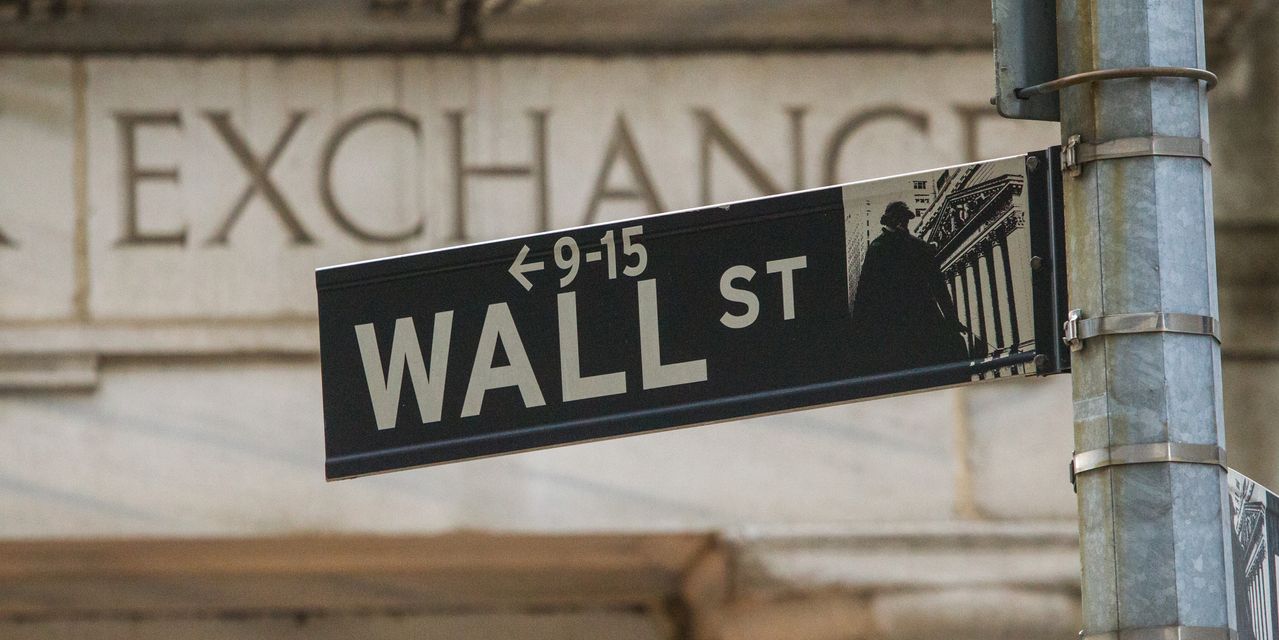
U.S. stock indexes traded mostly higher Wednesday afternoon, with the Dow Jones Industrial Average eying eight straight sessions of gains, as earnings reports underpinned investor sentiment, while traders hope that cooling inflation can help major central banks soon end interest-rate hikes.
The tech-heavy Nasdaq Composite, however, gave up its advance in afternoon trade.
How are stocks trading
-
The Dow Jones Industrial Average
DJIA,
+0.44%
gained 92 points, or 0.3%, to 35,045 -
The S&P 500
SPX,
+0.22%
rose 3 points, or 0.1% to 4,559 -
The Nasdaq Composite
COMP,
-0.08%
fell 26 points, or 0.2%, at 14,326
On Tuesday, the Dow Jones Industrial Average rose 367 points, or 1.06%, to 34952, the S&P 500 increased 32 points, or 0.71%, to 4555, and the Nasdaq Composite gained 109 points, or 0.76%, to 14354.
What’s driving markets
With second-quarter earnings beating expectations, even though profits overall are likely to fall for a third quarter, investors are extending a rally Wednesday on hope for an end to aggressive interest-rate hikes by the Federal Reserve this year, and few signs of a recession on the horizon.
See: Goldman Sachs’s stock turns higher as bank sees potential uptick in deal making after ‘noisy’ second-quarter results
Results from the banking sector, which kicked off the second-quarter earnings season, have generally gone down well with investors, and Wednesday saw more financials reporting in the form of Goldman Sachs
GS,
and U.S. Bancorp
USB,
Some market darlings will take the stage after the closing bell on Wednesday, with Tesla
TSLA,
Netflix
NFLX,
United Airlines
UAL,
and IBM
IBM,
presenting their figures.
See: Tesla earnings: What to expect from the Cybertruck maker
Philip Lawlor, managing director of market research at Wilshire Indexes, said markets will be looking for a “sustained uptrend” in 2024 earnings-per-share (EPS) estimates on the back of the second-quarter earnings reporting for “genuine confirmation” that the markets are through the worst of the EPS cycle.
“The 12-month forward EPS has bottomed and inflected higher this year. However, this is largely a function of the timing effects of taking more and more of next year’s EPS estimates into account,” said Lawlor.
“What we want to see is a positive inflection in the EPS estimates, so we’re at that very important pivot point,” he told MarketWatch in a phone interview on Wednesday. “We’re looking at the EPS numbers as they come up: how many analysts actually go back, punch in higher EPS numbers that will get reflected into the upgrading at a market level — absolutely key.”
Also underpinning sentiment is hope that slowing inflation can help central banks soon stop increasing borrowing costs and that the interest-rate rises to date have yet to badly damage the U.S. economy.
Brent Schutte, chief investment officer at Northwestern Mutual Wealth Management Company, said he thinks the macro news is having a more dominating effect on the stock market than earnings news.
“Certainly earnings have come in and they’ve been supportive of that, but the prime worry over the past year has been when would inflation come down, and will the Fed’s actions put the economy into a recession. And it appears that the answer so far has been no,” Schutte said in a phone interview.
Still, Schutte expects a recession to hit later this year or early next year.
“I think you still have a lot of liquidity leftover from the monetary policy during Covid that has helped to keep the U.S. economy afloat. I categorize it as policymakers are in control of the bathtub – they turned on all the faucets in 2020 to fill the bathtub with water, with liquidity, to keep the economy moving. Now they’ve completely shut off the faucets and opened the drain, but not all the liquidity and all the water has gone,” Schutte said.
See: Why one analyst thinks possible recession could still arrive by February
Helping lift sentiment was also some positive news from the U.K., where data showing consumer prices rose at their slowest pace in more than a year sparked not only a slide for the pound GBPUSD but also a drop in U.S.
TMUBMUSD02Y,
and European government bond yields.
In U.S. economic data, construction of new homes fell 8% in June, as U.S. homebuilders sharply slowed down starting on new single-family homes and focusing on finishing existing projects. The pace of construction slowed from a jump of nearly 16% the previous month.
Companies in focus
-
Goldman Sachs Group Inc.
GS,
+1.71%
stock gained 1.5% Wednesday even though the bank reported second-quarter earnings that fell short of Wall Street’s lowered expectations. -
Interactive Brokers Group Inc.
IBKR,
-4.05%
slid 3.7% after the online banking company reported fiscal second-quarter results that fell short of analysts’ estimates. -
United Community Banks Inc.
UCBI,
-1.61%
fell 1.5% after the regional bank reported second-quarter results that came up short of estimates, as competition to attract new customers drove up costs. -
Carvana Co.
CVNA,
+32.41%
rallied almost 30% Wednesday after the used-car retailer easily topped sales expectations for its latest quarter and announced a deal with noteholders to restructure its debt. -
AT&T
T,
+8.48%
and Verizon Communications
VZ,
+5.34%
saw their stock rise by 8.4% and 5.6%, respectively. AT&T said in a Tuesday court filing that it would hold off on prior plans to remove lead-sheathed cables running underneath California’s Lake Tahoe amid recent reporting on the legacy cables. -
Shares of Oddity Tech
ODD,
+37.70%
added 35% out of the gate after the company’s initial public offering priced above its proposed range.
undefinedhisholm contribued
Read the full article here