



 English
 Français
 Deutsch
 Italiano
 Português
 Русский
 Español
 简体中文
简体中文 हिन्दी
 日本語
日本語
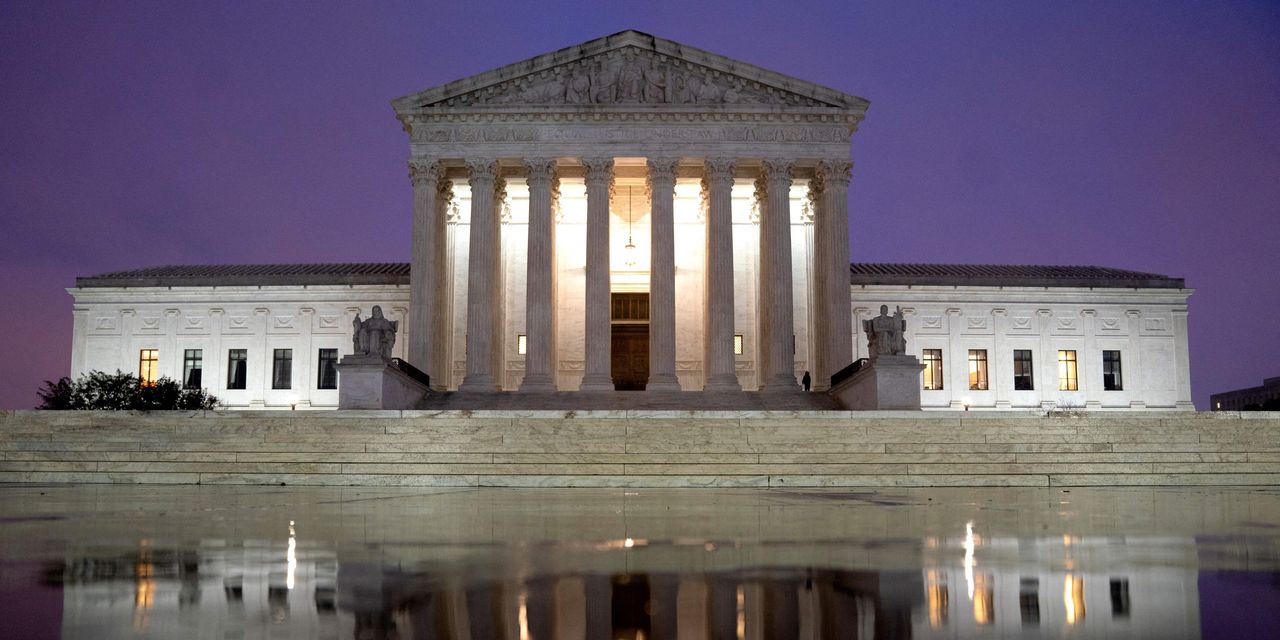
Alphabet Inc.’s Google scored its second major legal victory in several weeks after the U.S. Supreme Court on Monday declined to hear a four-year-old lawsuit from the website Genius claiming the search-engine giant violated a contract by using Genius’s song lyrics without a license.
The decision could have far-reaching implications for copyright laws, online speech and aggregation. A lower New York state court ruled in 2020 that Genius does not own any of the copyrights to its lyrics, but that they are held by the songwriters and publishers. The U.S. Court of Appeals for the Second Circuit affirmed that decision in March 2022.
The Solicitor General had recommended that the Supreme Court reject the case earlier this year.
Genius, formerly known as Rap Genius, contends that Google
GOOGL,
GOOG,
breached its contract, resulting in millions of dollars in losses for Genius, by scraping lyrics and promoting them in Google Search results without attribution. To drive home its point, Genius said it used a secret code — the word “red-handed” — to prove Google was stealing its lyrics.
The lawsuit alleges one of the first Google posts Genius suspected of being copied involved the lyrics for the song “Panda” by the rapper Desiigner. Genius said lyrics for songs by rapper Kendrick Lamar and pop singers Selena Gomez and Alessia Cara were also copied by Google.
Most websites include terms of service, which are usually backed by state law. The lower court’s decision effectively diminishes those contractual protections and “threatens to hobble any of thousands of companies that offer value by aggregating user-generated information or other content,” Genius argues.
Google had called Genius’s warnings of damage to other online businesses “alarmist hyperbole.”
“We appreciate the court’s decision, agreeing with the Solicitor General and multiple lower courts that Genius’s claims have no merit,” Google spokesman José Castañeda said in an email message Monday. “We license lyrics on Google Search from third parties, and we do not crawl or scrape websites to source lyrics.”
In May, Google won a case in the nation’s highest court over whether YouTube can be held liable for hosting terrorist videos. It cannot, the Supreme Court found.
Google shares are flat in extended trading.
Read the full article here