



 English
 Français
 Deutsch
 Italiano
 Português
 Русский
 Español
 简体中文
简体中文 हिन्दी
 日本語
日本語
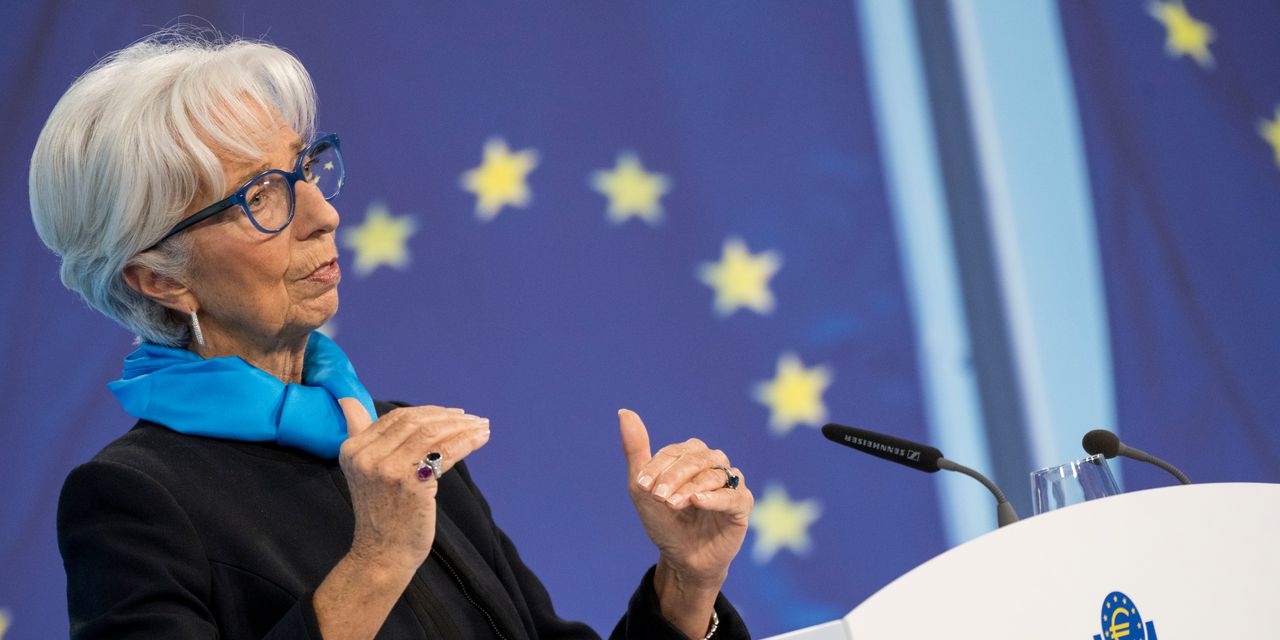
ECB President Christine Lagarde.
Getty Images
The European Central Bank raised interest rates by a quarter-point as expected, but left the door open to keeping rates steady at its next meeting to set monetary policy.
The ECB took its main refinancing rate for the 20 countries sharing the euro to 4.25% from 4.0% following the Federal Reserve’s quarter-point rate hike on Wednesday. The U.S. central bank moved rates to their highest level in 22 years, but offered little in the way of guidance for future meetings.
ECB President Christine Lagarde said in a press conference following the decision that the increase was in response to inflation remaining “too high for too long” but that the central bank had an open mind about future decisions.
“The developments since the last meeting support the expectation that inflation will drop further over the remainder of the year but will stay above target for an extended period. While some measures show signs of easing, underlying inflation remains high overall,” the ECB’s Governing Council said in its statement.
Attention will now turn to whether another ECB rate increase is in store for September despite concerns about sluggish growth.
The wording of the ECB’s statement was slightly different from the previous one, saying future decisions would ensure interest rates “will be set at sufficiently restrictive levels.” In June, it it said interest rates “will be brought” to sufficiently restrictive levels.
“The ECB has opened the door to a pause in September. But it will depend on the data, and Friday’s inflation data might tell us more about the potential for a September hike,” said Mark Wall, chief European economist at
Deutsche Bank
Research.
The euro was down 0.8% against the dollar to less than $1.10 after Lagarde’s press conference. It gave up earlier gains as traders appeared to take her statements as a sign the bank will be less aggressive in tightening monetary policy.
Lagarde had signaled at the central bank’s last meeting that it would raise rates this month. Since then, the immediate outlook hasn’t changed. While inflation in the bloc fell to 5.5% in June from 6.1% in May, both headline and core rates remain well above the ECB’s target rate of 2%.
The ECB’s previous hawkish tone, however, could be tempered by recent data. Demand for business loans in the euro zone has hit its lowest level since the ECB started collecting data in 2003, according to a quarterly survey published Tuesday.
“The bank will have an array of economic data, plus the latest staff projections by the time we get to the next meeting in mid-September,” said Jamie Dutta, an analyst at Vantage.
The ECB also said Thursday that it would cut the interest rate it pays to banks on their minimum reserves held with central banks to zero . That hit bank stocks in Europe. American depositary receipts of
Deutsche Bank
(ticker: DB) fell 3.5%.
Write to Adam Clark at [email protected]
Read the full article here