



 English
 Français
 Deutsch
 Italiano
 Português
 Русский
 Español
 简体中文
简体中文 हिन्दी
 日本語
日本語
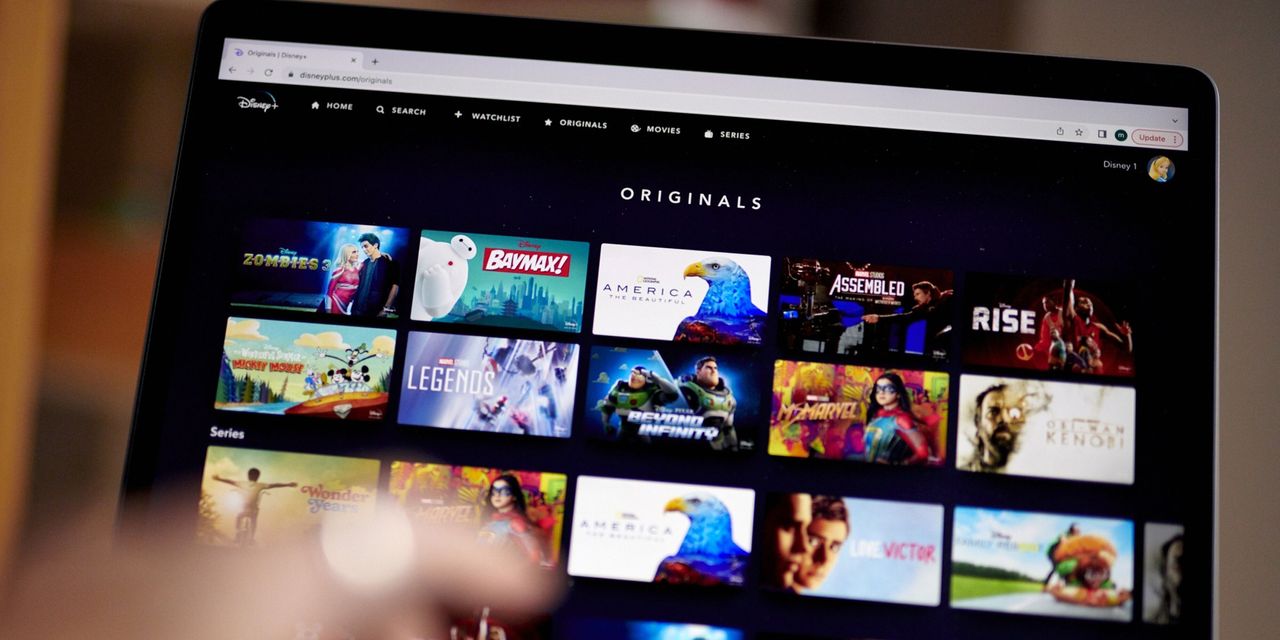
Disney+ just got its second price hike in eight months.
Gabby Jones/Bloomberg
Even in the Magic Kingdom, 2023 will be remembered as the Year of Efficiency.
Walt Disney
CEO Bob Iger is doing his darndest to engineer a turnaround at the Mouse House, which for investors has become the unhappiest place on Earth, with the stock trailing the S&P 500 by more than 10 percentage points this year. Now it’s the Disneyphiles who are going to feel the pinch.
The company is set on pulling more value out of the company’s considerable entertainment assets, a potential stock catalyst that Barron’s highlighted in a recent cover story about Disney (ticker: DIS). Despite mixed quarterly results this past week, Disney shares were up after the earnings report because the company is yet again raising prices for its Disney+ streaming service.
Disney+ growth in the U.S. and Canada has gone flat, ending the latest quarter with 46 million subscribers in the two countries combined. International subscriber growth was marginally better, up 2%. (That’s assuming you exclude Disney+ Hotstar, which serves the Indian market; that service saw subscribers fall 24% in the quarter, after it lost the rights to stream Indian Premier League cricket matches.)
It’s true that Disney has shown impressive progress in reducing operating losses at Disney+, but the service needs a path to revenue and profit growth. If subscriber growth remains flat, then Disney needs to generate more revenue per subscriber, and there are only two obvious options to get there—charge more or sell more advertising.
Disney wants to do both.
In December, Disney launched an ad-supported version of the service at $7.99 a month, which had been the price for the ad-free version, and it launched a new ad-free option at $10.99 a month. Here we are eight months later, and Disney is boosting the ad-free price again, this time to $13.99, while leaving the ad-supported price unchanged. Likewise, Disney boosted the price for ad-free Hulu, the streaming service it co-owns with
Comcast
(CMSA), by $3 a month, to $17.99; a new combo offering of both services on an ad-free basis will be $19.99 a month.
Subscribers unhappy with the higher prices can downshift to ad-supported plans, and that would be totally fine with Iger. Disney seems to be making a bet that it will make more money from ad-backed plans with a lower subscription price than from higher-priced ad-free plans. Iger said this past week on the company’s earnings conference call that 40% of new customers have been choosing ad-supported plans.
As it did with the rollout of an ad-backed streaming tier, Disney is taking a page from the
Netflix
playbook. Netflix (NFLX) recently killed off its $9.99-a-month basic plan, leaving new subscribers to choose between a $6.99 a month ad-supported option or an ad-free option at $15.99. Netflix has said that based on early data, it’s making more money from the ad-supported plans.
In another Netflix-inspired move, Iger said Disney+ plans to crack down on password sharing starting in 2024. Netflix is finding some early success in limiting freeloaders’ access to content. The company added 5.9 million subscribers in the June quarter, triple the March-period gain.
This all kind of stinks for viewers. If you subscribe to the top service tiers from Apple TV+, Amazon Prime Video,
Warner Bros. Discovery’s
Max, Comcast’s Peacock, Paramount+, and a bundled version of Hulu and Disney+, it now comes to more than $105 a month. And that’s before more services choose the Netflix and Disney model of raising prices and cracking down on password sharing.
The days of cheap TV are over.
Write to Eric J. Savitz at [email protected]
Read the full article here