



 English
 Français
 Deutsch
 Italiano
 Português
 Русский
 Español
 简体中文
简体中文 हिन्दी
 日本語
日本語
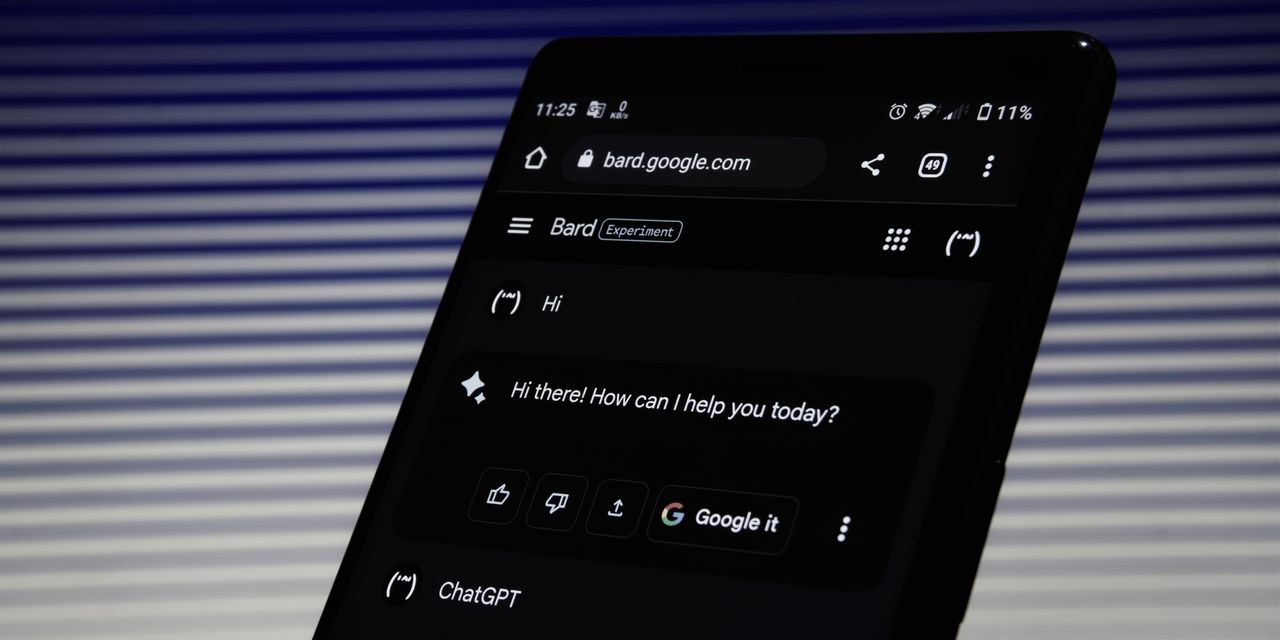
Bard users will have the option to listen to Bard’s response.
Dreamstime
Alphabet
is expanding its Bard AI chatbot to include more than 40 languages, making the service available in most of the world, the company said Thursday.
Alphabet is adding the ability to chat in Arabic, Chinese, German, Hindi, and Spanish, among other languages, and they are among a flurry of new features Bard product lead Jack Krawczyk unveiled in a blog post.
Starting Thursday, for instance, users will have the option to listen to Bard’s response, rather than simply reading them. Krawczyk notes the option can be “especially helpful if you want to hear the correct pronunciation of a word or listen to a poem or script.”
The company is also adding the ability to use images in prompts. “Whether you want more information about an image or just need help coming up with a caption, you can now upload images with prompts and Bard will analyze the photo to help,” Krawczyk writes.
Alphabet (ticker: GOOGL), the parent of Google and YouTube, also is adding a tool to change the style of Bard’s responses—you can choose simple, long, short, professional, or casual responses. “For example, you can ask Bard to help you write a marketplace listing for a vintage armchair, and then shorten the response using the drop-down,” Krawczyk writes. That feature went live Thursday in English, and will expand to other languages soon, the company said.
Another new Bard feature makes it easier to revisit previous prompts—you can pin and rename conversations. That feature is available now in more than 40 languages. Also new: web links to conversations, making it easier to share creations and ideas with others.
The new version of Bard also makes it easier to export computer code written by Bard in Python to the software development tools Replit and Google Colab.
Write to Eric J. Savitz at [email protected]
Read the full article here