



 English
 Français
 Deutsch
 Italiano
 Português
 Русский
 Español
 简体中文
简体中文 हिन्दी
 日本語
日本語
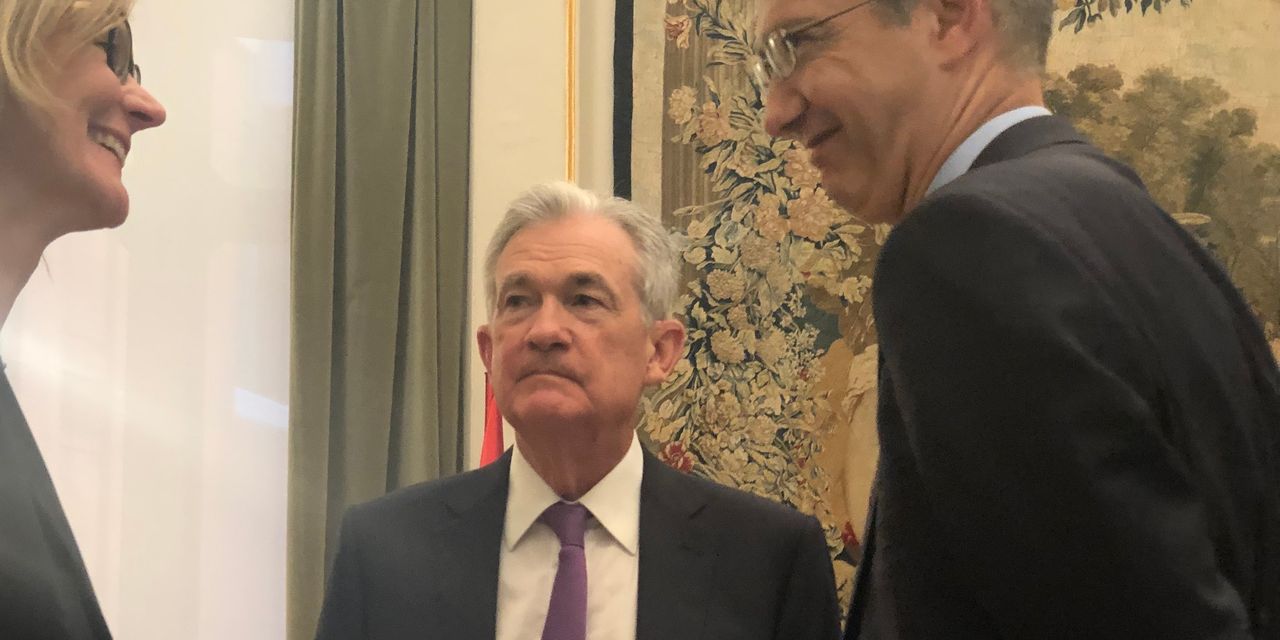
MADRID — When it comes to getting the balance right on interest rates, the Federal Reserve isn’t quite there yet, Chairman Jerome Powell said at a conference in Spain on Thursday.
“In the beginning, there was a little risk of overdoing it and a lot of risk of underdoing it. As you get closer and closer to where you think you’re going to your destination, those risks begin to become more into balance,” said Powell, in comments made during a panel discussion at the Bank of Spain’s financial stability conference. “I wouldn’t say they’re in balance yet.”
His comments sparked some upward pressure on bond yields
TMUBMUSD02Y,
as the central bank head largely reiterated hawkish comments heard in Sintra, Portugal on Wednesday. U.S. stocks fell after Powell said a “strong majority” of Fed policy makers were looking for two more quarter-percentage-point interest-rate hikes this year, potentially at the next policy meeting in July.
“The decision was made not to move in one meeting so that we can have more information,” he said in fresh comments on Thursday. The Fed held interest rates steady at its June meeting, but its so-called dot plot indicated two more hikes are ahead, which Powell backed up with his comments.
He said the Fed has been continuing to moderate its pace of interest rate increases. “And so it may be that we move at a meeting, then don’t move at a meeting. Each meeting is going to be decided, we haven’t taken consecutive moves off the table,” he said.
Powell said much depends on how the economy involves. “We’ve all seen inflation beat over and over again and shown to be more persistent and stronger than we expected. At some point, that may change and I think we have to be ready to follow the data and be a little patient,” he said.
In prepared remarks ahead of the Madrid conference, Powell reiterated some of the central bank’s observations on the U.S. economy: growth expanding at a modest pace, thanks to consumer spending and the housing market, while the labor market remains tight, with “robust” gains in the past three months. He said there are signs of “better balance” for supply and demand in the labor market.
Inflation has moderated, but the process of getting it down to the Fed’s 2% target “has a long way to go,” he said. And the full effects of monetary tightening will take some time to show, notably on inflation. Tighter credit conditions also remain a headwind for the economy, and bank stresses from March may lead to more tightening on that front, the effects also of which will take time to see.
Powell was asked on the panel whether the world will see a return to a very low interest rate environment, as was seen in recent years. He said economies will likely see the “enormous disruptions” to economies from the pandemic last “for years on end.”
“I think for the near term, central banks are going to be very sensitive about inflation. We will not assume that we’re going back to that low inflation environment for a good while because of course what you’ve seen has been happening,” he said.
“In terms of [interest] rates, I think we’re just going to have to find our way,” said Powell. “It wouldn’t have been thinkable to have a 5% interest rate before the pandemic and now the question is, is that tight enough policy, and a strong majority of the almost overwhelmingly FOMC participants think that we need to do more to get to a level of tight policy. So I don’t think we have the longer-run answer.”
Read the full article here