



 English
 Français
 Deutsch
 Italiano
 Português
 Русский
 Español
 简体中文
简体中文 हिन्दी
 日本語
日本語
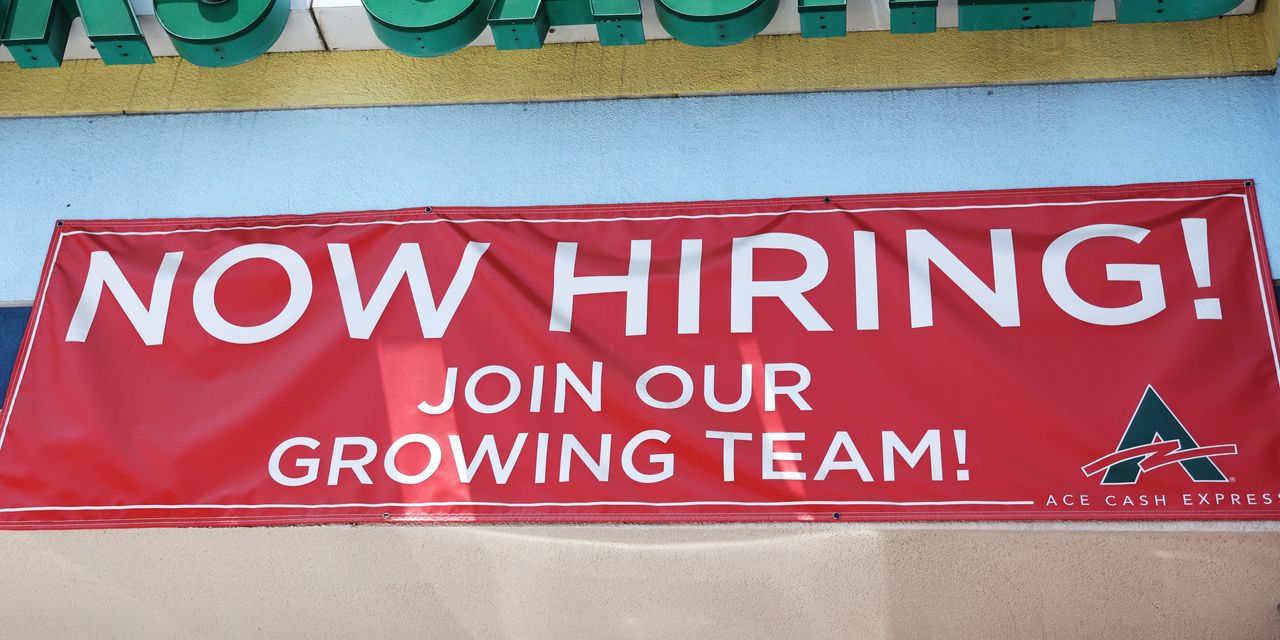
Is July going to be the month when U.S. job creation falls below 200,000 for the first time in two and a half years? Wall Street thinks it’s going to be close, but the labor market has shown surprising vigor.
Here’s what to watch for in the July U.S. employment report, due on Friday morning.
The forecast
The U.S. is expected to add 200,000 new jobs in July, down from 209,000 in the prior month, economists polled by the Wall Street Journal estimate.
By any measure, the labor market is still quite strong despite rising interest rates and somewhat slower economic growth compared to last year. In normal times a 200,000 increase in new jobs would be seen as great news.
But now? Not so much.
The Federal Reserve says the U.S. only needs to add 100,000 jobs a month to soak up all the new people entering the labor force in search of work. Anything above that could exacerbate a labor shortage, push wages higher and add to inflation.
Unemployment
The percentage of jobless Americans is forecast to hold steady at 3.6% in July and leave it near a half-century low.
Even more remarkable, the unemployment rate is the same now as it was when the Fed first began to raise interest rates 16 months ago to combat inflation.
Since the spring of 2022 the Fed has jacked up a key short-term U.S. interest rate to a top end of 5.5% from near zero.
The Fed, not to mention every economist on Wall Street, expected higher rates to slow U.S. economic growth, boost layoffs and raise unemployment to 4.5% or higher.
Now many forecasters think the jobless rate is unlikely to go much above 4% — if even that.
Worker pay
Average hourly wages are forecast to rise more slowly at 0.3% in July after three months of slightly larger increases.
The pace of wage growth over the past 12 months, in turn, is expected to taper to 4.2% from 4.4%. That’s still too fast for the Fed, but senior officials would welcome a further slowdown. They’d like to see annual wage gains return to the pre-pandemic growth rate of 3% or less — a level consistent with low inflation.
Labor weak spots
The labor market hasn’t softened as much as the Fed would like or as Wall Street predicted, but it is softening.
One way to tell: Fewer industries are hiring.
The monthly jobs report includes a measure that shows the percentage of industries gaining jobs compared to those losing jobs. This so-called diffusion index fell to 58% in June from record 84.6% in early 2022.
Most of the hiring lately is taking place in leisure and hospitality — hotels, restaurants, theaters, amusement parks. Employment has only returned recently to pre-pandemic levels.
“A tick down would indicate underlying weakness in the labor market,” said Dan North, senior economist at trade credit insurer Allianz Trade North America.
Fed reaction
The Fed is weighing whether to raise interest rates again in September.
A smaller increase in jobs in July and a further slowdown in wage growth would bolster the case for standing pat. A big gain similar to what ADP reported would worry the Fed and cast a pall over Wall Street
DJIA.
A pair of senior Fed officials indicated this week they are on the fence on raising rates again. And another doesn’t think a rate hike is needed next month, based on the current trajectory of inflation.
Read the full article here